Water, smoke, fire and cloth: the motion words that steer them in AI video
Which verbs and speed words steer water, smoke, fire and cloth in an AI video clip, what breaks in each, and a short check to run on every render.
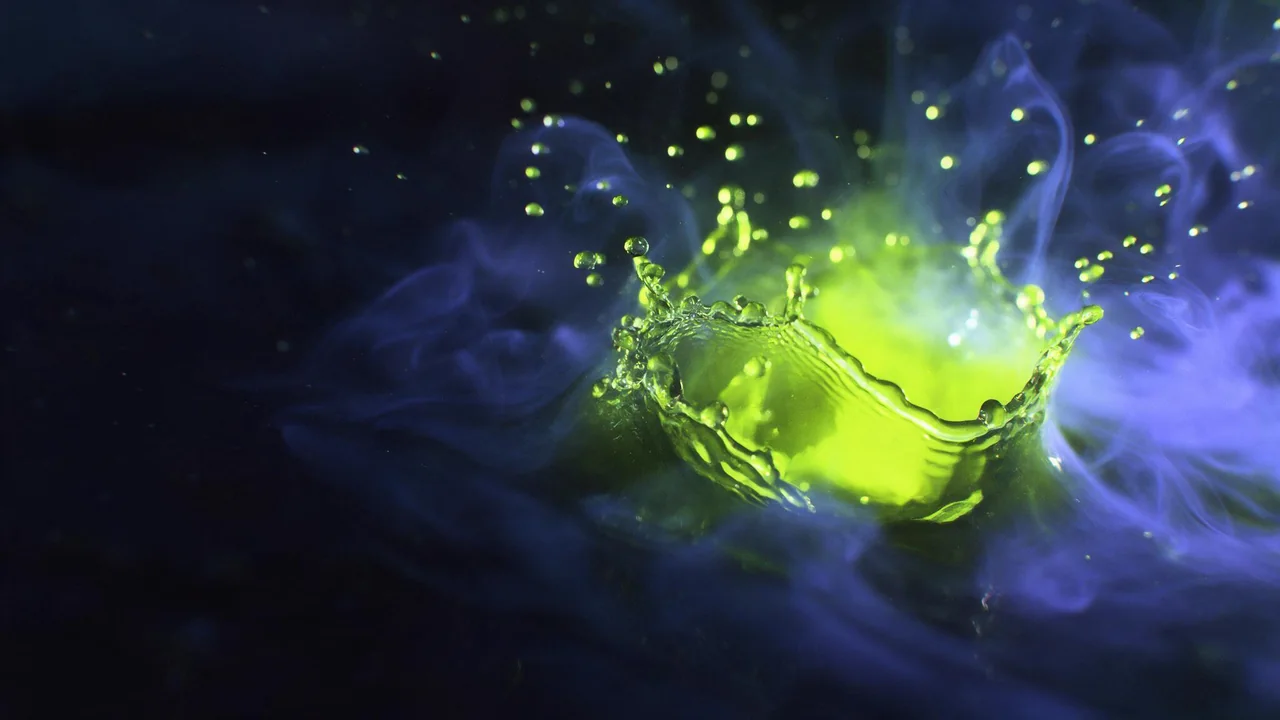
Water, smoke, fire and cloth have no fixed shape, so a video model cannot copy them from the picture the way it copies a chair. It has to invent the motion frame by frame, and the verb you pick decides which kind of invention you get. "Flows" and "splashes" are both water. They give two different clips.
Below is what each material answers to, what usually goes wrong, and a check to run before you keep a render. None of this is physics: the model imitates how these things look in footage it has seen, so expect plausible, not accurate. Try wordings on a short, cheap clip first; P-Video-2 text-to-video has a draft toggle for that.
Water
Pick the verb for the kind of water: "ripples", "flows", "pours", "splashes", "drips", "crashes". A calm surface wants "ripples outward" or "drifts"; moving water wants a direction, "pours down the left side of the rock". Add a speed word such as "gently" or "in a steady stream", because the unqualified default is often a slow, syrupy pour.
A narrow stream pours over a mossy rock ledge in a steady stream, spray bouncing off the stones below, water flowing from right to left. Natural speed, camera locked low and close.What breaks: water that flows uphill or changes direction mid-clip, reflections that do not match the scene, and splashes that hang in the air for too long. Name one direction and keep the event single. For a splash that is meant to be fast, the words in the slow motion and timelapse guide apply.
Smoke
Smoke answers to "drifts", "curls", "rises in a thin column", "billows" and "disperses". Say where it starts and where it goes: a wisp that leaves a cup and thins out in the air is a clear story, while "smoke" alone returns a fog that sits there. Light helps, since smoke is hard to read on a flat grey background; ask for a dark backdrop and a side light.
A single stick of incense on a dark wooden shelf, a thin line of smoke rises straight up, then curls and slowly thins out near the top of the frame. Side light from the left, still air, camera locked.What breaks: smoke that turns solid, like cotton wool, or loops back on itself. "Thin", "wispy" and "transparent" push it away from the cotton look.
Fire
Fire needs a fuel and a size: "a candle flame flickers", "flames lick up the side of the log", "embers drift upward". The verbs "flickers" and "sways" give a calm flame, "roars" and "surges" a big one. Small flames are the easier ask; a burning building asks the model for a lot of moving parts at once, and the detail turns to glow.
What breaks: a flame that is as bright as the lamp it came from, a fire with no effect on the light of its surroundings, and sparks that float like snow. Mention what the fire lights up ("orange light moves across the stone wall") and the clip usually looks grounded.
Cloth
Cloth needs a cause. "A curtain moves" is vague; "a curtain lifts and falls in a light breeze from an open window" gives the model a force. Useful verbs are "billows", "flutters", "ripples", "drapes" and "settles"; for a long garment add where it is pinned, such as "hangs from the rail". Say the fabric as well: silk flows and clings, heavy wool swings slowly and holds folds.
What breaks: cloth that passes through the thing behind it, folds that change pattern between frames, and a hem that gets a new length. A pinned corner and one steady breeze fix most of it. Expect more trouble when a hand or a body moves the cloth than when wind alone does.
Speed words that work across all four
- "Gently", "slowly", "lazily" for calm motion, and the safest first try.
- "In a steady stream" or "at a constant pace" when the motion keeps speeding up or stalling.
- "Natural speed" when everything looks like it is underwater.
- "Violently", "in a gust" only with a named force and a short event; otherwise the whole scene shakes.
Clip length changes what these words mean. A flame can flicker for as long as you like, but a splash is over in a moment, and clips can run up to 30 seconds on the longest-running model. Match the event to the length, or say "the clip covers one splash".
How to check a clip
- Watch it muted, once, without pausing. If your eye catches a jump, a reset or a loop of the same shape, it will catch your viewer's too.
- Scrub to the last second. Fluids drift as the clip goes on: the stream changes direction, the smoke turns to mist, the cloth grows a new fold.
- Look at the edges of the frame. Water, smoke and cloth often leave the frame wrongly, or are cut off by something that appears from nowhere.
- Check what is not meant to move. A rock, a candle holder, a wall: if it shimmers, lock the camera and say "the rest of the scene stays still".
- Compare with a second take. Render the same prompt again before you change a word; if both fail alike, change the wording, and if they differ, it was luck.
What the studio cannot do
There is no physics solver here. You cannot set a wind strength, a viscosity or a temperature, and nothing guarantees that a splash obeys gravity or smoke obeys air. A model renders what looks like footage, and sometimes that is wrong in ways you only see on a second watch. Models that take a first picture, such as Kling V4.0 image-to-video, fix the look of the scene, so the prompt only has to describe the motion. The draft, lock, finish workflow keeps the tries cheap, and the catalog shows which video models are available.
Questions
Why does my water look like gel or syrup?
The default pace of many models is slow and smooth. Add "natural speed", a direction and a verb for the kind of water, such as "pours" or "splashes", and keep the camera locked.
Can I control how strong the wind is on a flag or a curtain?
Not with a setting. Only the words steer it: "a light breeze" or "a strong gust" gives a gentler or stronger motion, and the result is a look, not a measured force.
Is image-to-video better for fire and smoke?
Often yes. The first picture fixes what the fire or smoke looks like, and the prompt only says how it moves. It can still drift over a long clip, so check the last second.